
NEW UPDATED EDITION! This new version of the Schools & Charities version of BaFa' BaFa' has been adapted and updated for classrooms to have the same great learning while being more user friendly. The new edition is gender neutral (hierarchy replaces patriarchal society), addresses personal space (no direct touching), includes more materials for larger class sizes, better instructions for both facilitators and students and much more. The new edition makes it easier for facilitators/educators to teach about culture and diversity without some of the resistance faced lately with the original version of BaFa' BaFa'.

Energize your Curriculum
In BaFa' BaFa' participants come to understand the powerful effects that culture plays in every person's life by experiencing it themselves. It may be used to help participants prepare for living and working in another culture or to learn how to work with people from other departments, disciplines, genders, races, and ages. Here are a few of the ways BaFa' BaFa' has been used in the hundreds of thousands times it has been run around the world:
BaFa' BaFa' initiates immediate, personal change. This simulation makes participants personally aware of the issues around diversity, inclusion and cultural awareness. Participants feel the alienation and confusion that comes from being different. BaFa' BaFa' shakes participants out of thinking in stereotypes of anyone who is different. They learn the value of all faces in the workplace in a safe, stimulating environment.
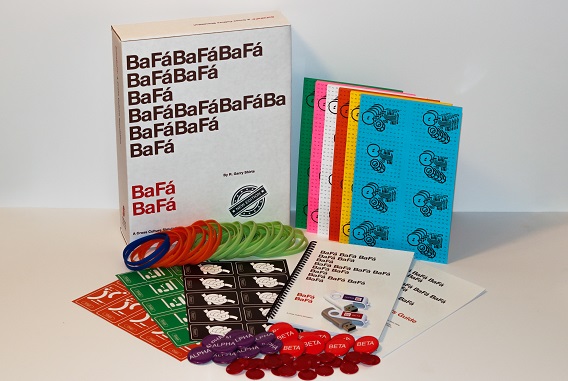
NEW UPDATED Schools & Charities version of BaFa' BaFa' is a reusable kit which includes everything needed to run the simulation for up to about 50 participants at one time.
NEW BaFa' BaFa' Schools & Charities Edition: $329
Add BaFa'BaFa' to Basket and Continue Shopping
Add BaFa'BaFa' to Basket and Proceed to Checkout
More Articles & Information About Schools & Charities BaFa' BaFa'
Please note the original version of BaFa' BaFa' for Schools and charities is still available. You can order it here or contact us for more information.
What happens in BaFa' BaFa'?
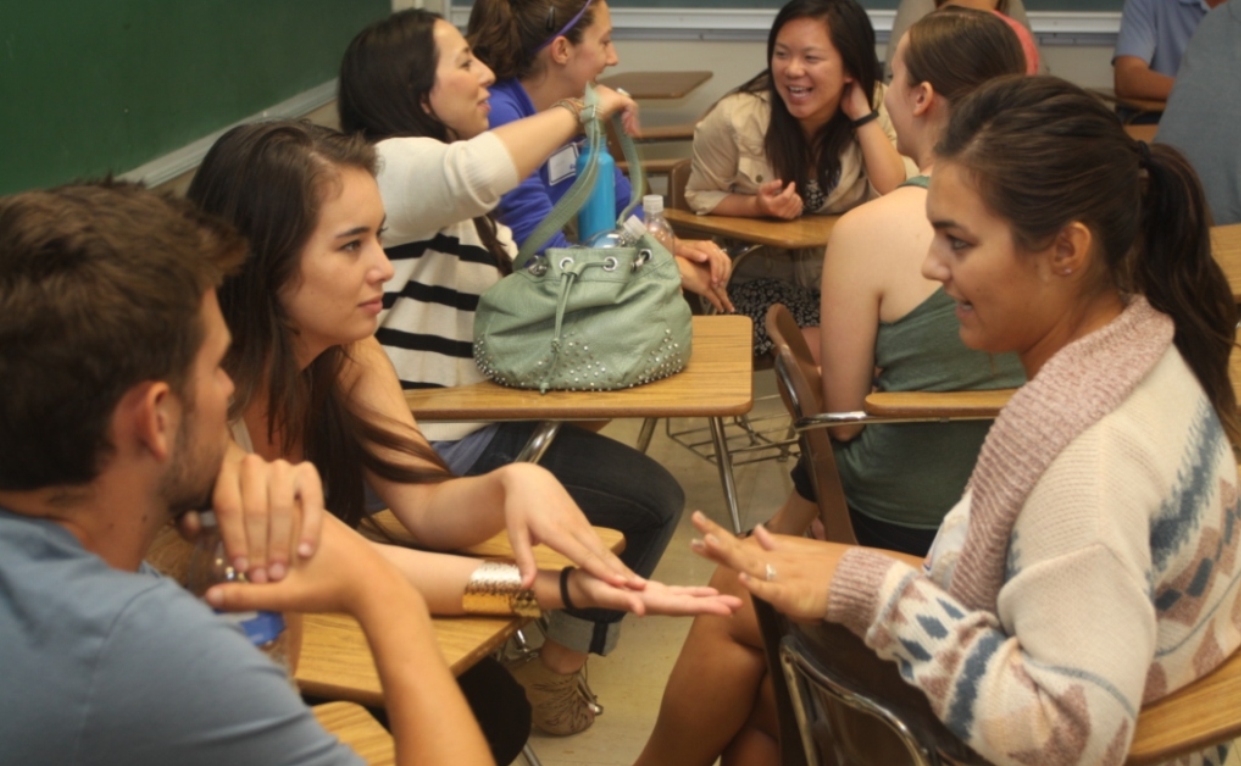
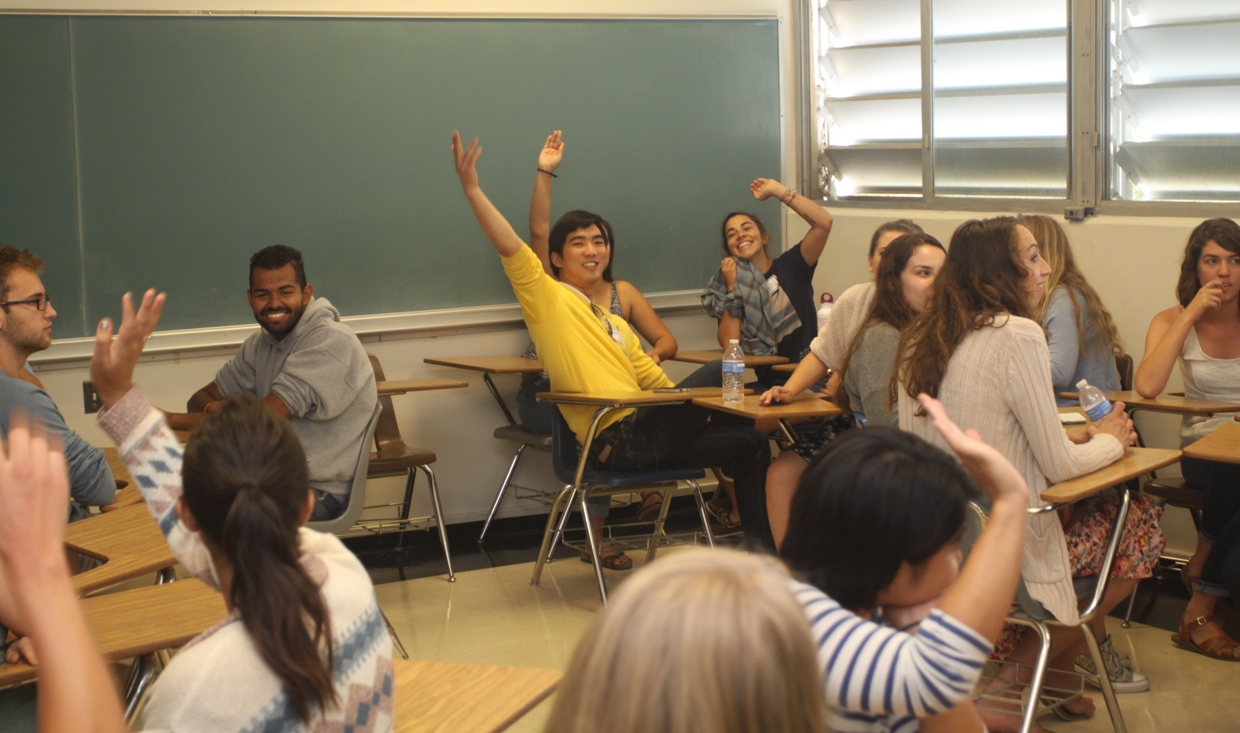
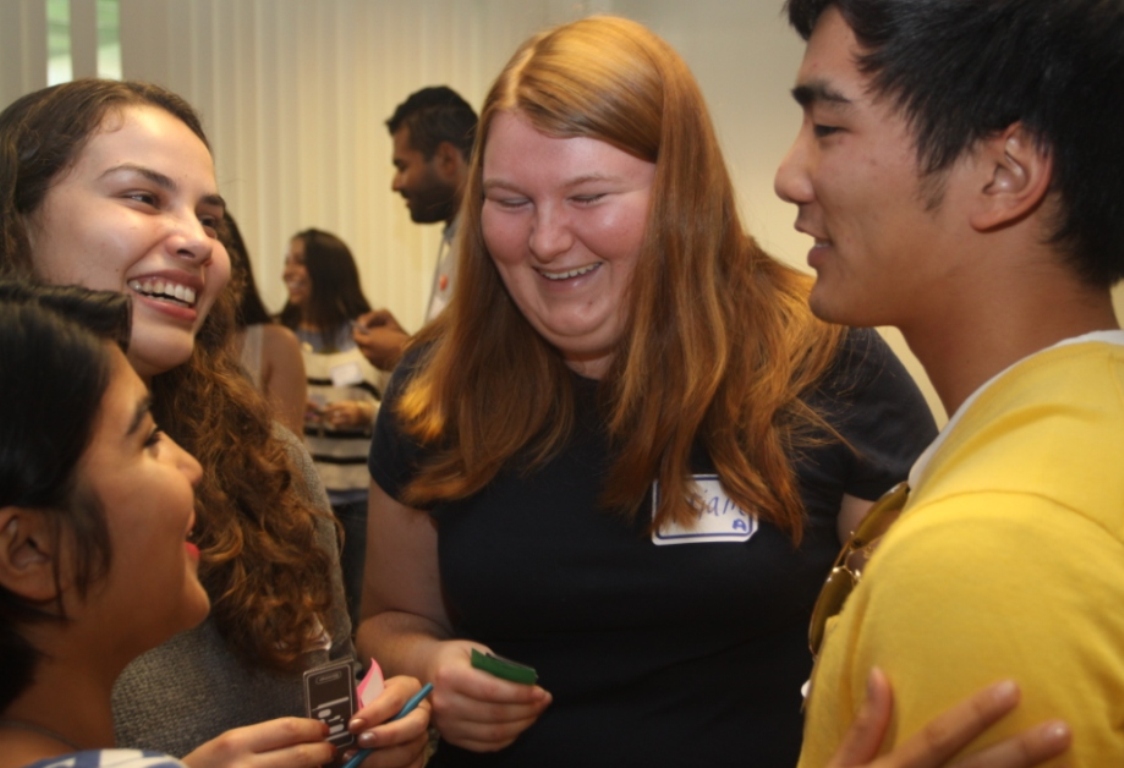
After an initial briefing two cultures are created. The Alpha culture is a relationship oriented, high context, strong ingroup outgroup culture. The Beta culture is a highly competitive trading culture. After the participants learn the rules of their culture and begin living it, observers and visitors are exchanged. The resulting stereotyping, misperception and misunderstanding becomes the grist for the debriefing.
Keep in mind the purpose of the activity. The goal is to create a feeling that is similar to the shock that people experience when they visit or live in another culture and discover they don’t understand the culture, that the culture’s values really are different than their own and that many of the assumptions and strategies they use to get along in their home culture don’t work or are counterproductive in the one they are visiting.
By necessity, the Alpha and Beta cultures cannot approach the depth and richness of an actual culture, so we need to reduce the time proportionally to create the desired effect. Most participants would like more time to study and figure out the culture, but the goal of the simulation is not for them to have enough time to decode the other culture – that would not create the desired effect. Decoding could be done because these are artificial cultures, but that would not be realistic. Many people live in a foreign culture for years and still are caught up short when they realize that there are some behaviors, attitudes or values that they don’t understand.
What does BaFa' BaFa' teach?
The BaFa' BaFa' simulation is often used to introduce the notion of cultures then follow up with a discussion and analysis of specific cultures and the way they are formed.
Betans speak a "foreign" language made up of a combination of vowels and consonants. It is easy to learn and use but difficult to understand if one doesn't know the rules governing its use. When Alphans come to the Beta culture and hear the language they are often intimidated by it and withdraw from the culture creating an impossible communications barrier. Others are able to make themselves understood very easily with gestures, sign language and facial expressions. Each of these reactions creates excellent opportunities to discuss and analyze the particular communication process under scrutiny. For example, what is the effect of the specialized language used by data processing people, engineers or finance people when people from all parts of a company come together to achieve a common goal? How should the salesperson react when clients use acronyms, initials and words which he or she doesn't understand.
Many instructors and trainers use BaFa' BaFa' to help students understand how stereotypes of other cultures, departments, companies or occupations get formed and perpetuated. "They're cold, greedy, all they do is work" are some of the words which Alphans use to describe the Betans. The Betans on the other hand, come to believe the Alphans are "lazy, unfriendly to outsiders, and don't like females."
As in life, such stereotypes make it difficult for people to work together effectively. Unlike life, however, the simulation gives participants an opportunity to analyze and discuss how such stereotypes are formed as well as methods for overcoming their negative effects.
How has BaFa' BaFa' been used?
It's been used in many different ways by schools and charitable organizations (view who's used Schools & Charities BaFa' BaFa').
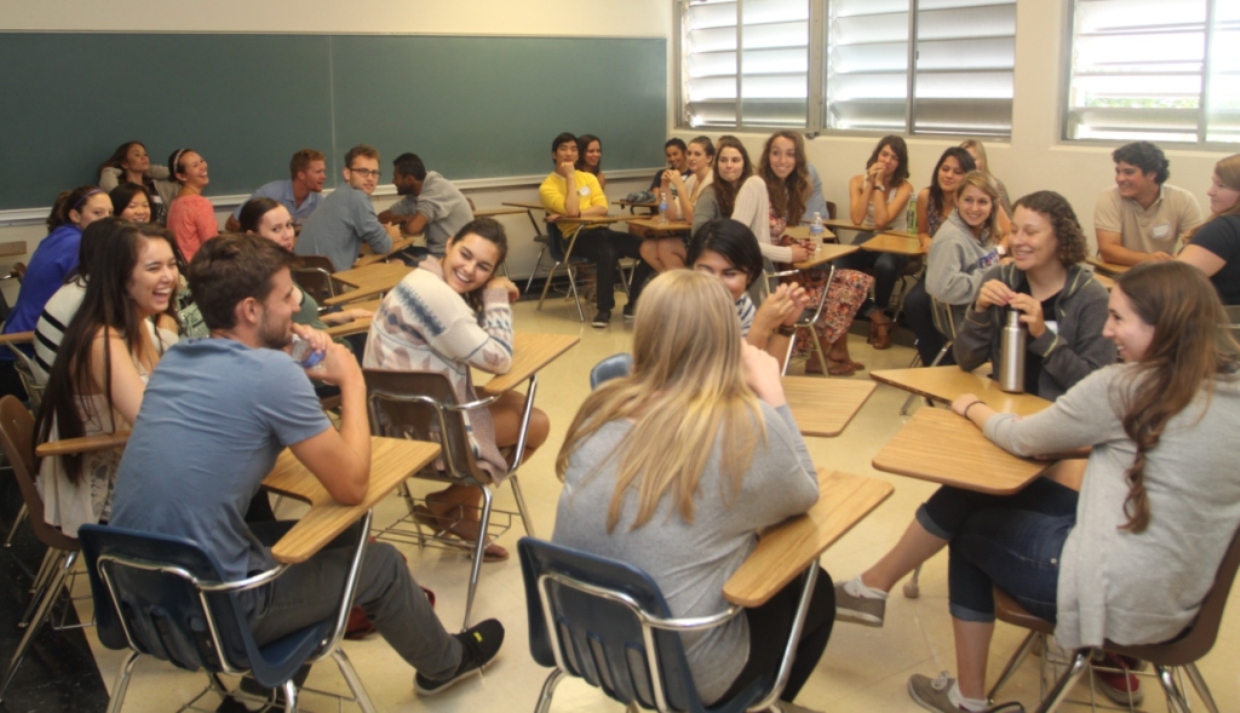
- The most common use is to help students, parents, neighborhood groups in all kinds of programs and situations work together more effectively. For example, Universities such as MIT and Temple have used BaFa' BaFa' to orient freshman students to the multicultural environment of the university.
- Teach resident assistants (RA's) and dorm personnel about the multicultural environment of campus housing.
- Business schools use it to help their students understand the value and importance of working with a diverse work force.
- Selling to other cultures.
- Fraternities and Sororities use it to create awareness and acceptance of cultural differences.
- Preparation for traveling or studying abroad (universities and religious organizations).
- It's also been used in sociology, anthropology courses to help students understand the meaning and importance of culture.
- Religious organizations use it to create awareness within their membership.
- Prepare for Missionary work abroad.
- And many more...
For uses by business and government agencies look at the Professional Version of BaFa' BaFa' page here.





Summarizing the Experience
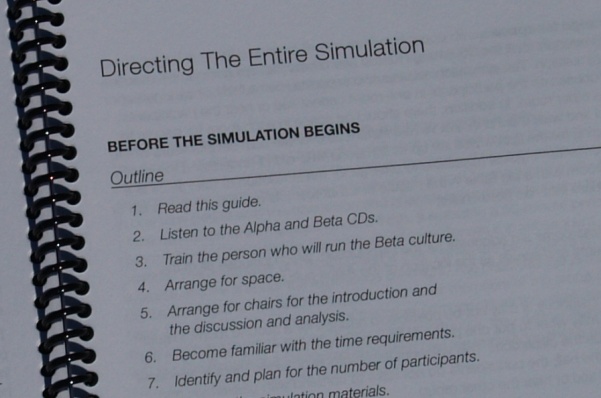
The Directors Guide includes questions intended to help the participants understand the ways in which people who belong to different cultures, organizations or groups can learn about one another. Some of the conclusions that the participants have reached after participating in the School & Charities version of BaFa' BaFa' are shown to the right.
Conclusions from Participants
It's really important to check out assumptions when interacting with people from another culture. Otherwise, one may draw many false conclusions that end up hurting the relationship.
The outsider must realize that what seems irrational, contradictory, or unimportant to him/her may seem rational, consistent and terribly important to the person in the other culture, company, department or occupation.
Judgements about other cultures, companies or departments by others must be regarded with a healthy dose of skepticism. In other words, one should make up one's own mind about another culture and not rely on the reports and experiences of others.
Different cultures, companies or departments often interpret the same event differently.
Developing a close friendship with a sensitive person from the other culture who can serve as one's guide and advocate is one of the best strategies for understanding and working with the other culture.
Judgements about other cultures, companies or departments by others must be regarded with a healthy dose of skepticism. In other words, one should make up one's own mind about another culture and not rely on the reports and experiences of others.
Simulation Training Systems is, and always has been, the sole publisher of BaFa' BaFa'. It was designed by our founder R. Garry Shirts and has only been published by our company. Other versions or"home made" versions of the simulation are not authorized by us (and are usually in violation of copyright laws) and we hope that you will use the authentic product published by us. We appreciate your support.
Explore Our Other Simulations for Schools & Charities

BaFá BaFá®
BaFá BaFá® helps participants understand how culture affects each person's behavior and what is required of each person to live or work with people who have different values, work styles, and world views

StarPower®
StarPower® participants are eager to discuss the normally taboo topic of power and how it can be used to create trust and commitment instead of distrust, anger and apathy.

StarPower® Online
StarPower®- New Online Version: participants are eager to discuss the normally taboo topic of power and how it can be used to create trust and commitment instead of distrust, anger and apathy.

Power of Leadership®
Power of Leadership is a real time, face to face, non-computer based simulation that helps students understand the value and dangers a leader faces when he or she attempts to use the power that goes with a position.

Where Do You Draw the Line?®
Where Do You Draw the Line?® helps participants understand the actual principles that most people use to make ethical decisions. We often customize this simulation to target specific ethical issues.

Guns or Butter®
Guns or Butter helps students understand geopolitical events at a visceral level. Participants experience the pressures and decision making processes political leaders need to address.
Rafa' Rafa'
Rafa' Rafa' is a simplified version of BaFa' BaFa' and therefore better suited to teach younger students about cultural awareness.
Not quite sure yet?
Why not call us at (858) 450-3400 or visit our contact page, we would love to chat with you!
I run a non-profit that focuses on the social emotional growth, character development, and leadership skills of youth through service and exchange. We take American high school and college students and adult chaperones to various grass roots organizations in developing nations to support the notion of affecting positive global change through action and service. Primarily, we have visited communities in Botswana, but our program is now extending to Haiti. The need for cross cultural training is obvious and the lessons of Bafa have been incredibly useful in helping to prepare our students for the experience.
Each of our trips comes with a week long orientation period in an effort to allow the participants to become familiar with one another and to prepare them for the work ahead. A huge piece of this is creating cultural sensitivity and understanding. We take our impact upon the communities where we work very seriously and want to ensure that our students and chaperones are prepared, understanding, and aware. We are constantly looking at ways to replicate the feelings and emotions of entering an unfamiliar setting. We want the kids to be able to act quickly under pressure and stress, while remaining sensitive to the needs of the community they are serving. Bafa does a wonderful job of replicating the anxiety of an unfamiliar setting, yet in a perfectly safe environment.
Bafa is great in a number of ways. The students became engrossed in their new culture; sometimes maintaining their identity as an Alphan or Betan for the remainder of the trip. The guiding activities wonderfully provide support and help to contextualize the activity. It also provides a nice base to work from as we experience a new culture. I often find myself referring to the activity whenever we come across a cultural challenge, easily helping the students understand and even empathize.
I have been running these trips for 8 years, but have only used Bafa in the past two. It is clear that with the help of Bafa my students are better prepared, more understanding, and more excited about the trip than they were without it.
I hope this is helpful.
Best,
Jay Crosby
Executive Director – Leadership Exchange
Our organization has used Bafá Bafá as a way to practice and emphasize cross-cultural communication between students from different countries. Our organization helps to implement programs of study for international visitors, with some of those visitors being students. We have had multiple groups of students from Iraq and Latin America visit our city and stay in local homes. One of the activities we have the students participate in is playing Bafá Bafá, so that they can understand how to not only interact with and better understand other people in their own countries, but also the variety of people that they will encounter in the United States and other places around the world. We used your product to further the goal of understanding others because it provides students a fun and interactive way of learning about and comprehending cross-cultural communication.
The Gulf Coast Citizen Diplomacy Council is a non-partisan, non-profit 501(c)(3) organization whose mission is to create and encourage collaboration between like-minded community stakeholders who value sharing the Central Gulf Coast with the rest of the world by:
• Facilitating professional and personal interaction for international leaders during official visits to the Central Gulf Coast
• Enhancing respect and communication through international exchanges and alliances
• Forging cultural, educational, and business relationships with the global community through citizen diplomacy
• Promoting greater understanding of global affairs in our community through a balance of public events, educational activities, and the International Visitor Leadership Program
• Promoting the Central Gulf Coast as an important center of commerce, culture, and tourism
Matthew Rizzo
Program Coordinator
Gulf Coast Citizen Diplomacy Council
(850) 595-0817
I am a Social Studies teacher….both MS and HS. I have used BaFa’ Ba’Fa’ for years teaching my students about other cultures and the terminologies used within our culture studies such as: assimilation, enculturation, ethnocentrism, taboo, norm, diffusion, culture shock, and many others. This simulation is so much fun and so very educational that I consider it one of my most valuable educational tools in my toolbox. It really allows students the opportunity to “see” these phenomena in action! And, it taps into their emotions concerning differing cultures, languages, norms, etc. I LOVE, LOVE, LOVE IT!!!
I’m an engineering grad student at Northwestern where we have an extraordinary amount of racial and cultural diversity, but often a lack of interaction between students who don’t belong to the same cultural group. Students often say this is because of comfort within one’s culture and discomfort without. Bafa Bafa has been an invaluable resource in helping students understand this comfort/discomfort not as “anyone’s fault” but as a natural phenomenon, and in helping students change their attitude toward cross-cultural situations from avoidant to engaged and able. The activity is always fun and the discussion afterwards always rich. The game and discussion materials are very well designed to be easy to implement, though there is some setup required each time.
I regularly receive your emails and now that we have come to the end of the semester, I find I have the time to respond with some information on how I use your simulation products. I use a variety of simulations in many of my classes and have found that a couple of yours are particularly engaging for my courses. I have used Bafa Bafa and Starpower for more than a decade in a variety of courses and in my volunteer work as well. I have designed my social problems class to center on games as anchored learning introductions and build the content around those first debriefings. The design has been so successful that I have a published article on its use that continues to be downloaded regularly, I answer dozens of emails a year on how to incorporate the simulations into the classroom, I have given dozens of workshops, and I even had a colleague adopt the curriculum this past year.
I have used both simulations in my classrooms, in teaching camps for future social studies teachers, in elementary and middle school classrooms as a volunteer, and even in my troop as a Girl Scout leader. Additionally, my colleagues and I have used both (or versions of both) in many interdisciplinary workshops and courses to help students bridge content from one course to another. When I do workshops, I always have individuals ask which simulations they should use to start. I use one that is homemade and free and so that is often the one I demo and provide. Beyond that, I always tell them that for sociology classes if they can buy only one product on the market it should be Starpower. I have found this to be the most grounded experience for my students in all of our classroom discussions. We even adapted our version for a famine unit in our Global Threats and Problems course (an interdisciplinary course that includes political science, economics, geography, and sociology.) When my departmental colleague used Starpower for the first time this year, he shared the experience after his class. His excitement reminded me of how much I like the teaching experience when I use simulations.
In workshops, I have found that while instructors like the idea of simulations, it is often as a one-time “bonus” learning for their classroom. Fewer faculty members have the direction or experience to build simulations into an overall design like anchored lessons, or ARCS. I have briefly thought of creating a consulting company to help instructors develop those skills, but building a business is not up my alley. I will leave that exciting experience to you and the other businessmen. One thing that I truly like about your sight is offering contact information with individuals who can help with these skills. I think those resources can help them integrate the products for maximum impact.
It has been a few years since I have been scheduled for Social Problems (the course with a full simulation design) but if I stay in academia after this summer I will be teaching it in the fall. Our first content simulation is Starpower. After using it, or a version of it, for at least one class in each semester for fifteen years or so, I still enjoy the immediate enlightenment that it provides.
We used BaFa’ BaFa’ as a key piece to opening discussions on Diversity in our Residence Life Spring student training retreat. We used the modules as they were designed, and our students really got into the activity. We then had a discussion with the students using their experience in BaFa’ BaFa’ to discuss culture, differences, stereotypes, observation, and assimilation. This activity gave students a solid experience to anchor these concepts to, serving as a launching point to discussing these concepts in society and our lives.
University of St. Thomas-Houston
Residence Life Department
I was first introduced to BaFa BaFa about 30 years ago (wow, time flies) at an outdoor education camp here in Ohio. There, we played the game with junior high and high school students to promote understanding and acceptance and to stimulate empathy and to highlight commonalities between students.
I currently use the game in the Introduction to Sociology class that I teach at a local university. My students really enjoy playing the game and I am able to align the de-briefing with the topics that we cover in class making the entire experience more meaningful. Having a fun way to demonstrate social concepts is a nice addition to a college class; who doesn’t like to play games?
Thanks for a great tool and for the inventor (your father?). The concepts are timeless.
Respectfully,
Allan E. Biggins
I’ve been using BaFa BaFa in my classes and it has been a smashing success. I feel like I get more learning from a single simulation than from several detailed lectures!